
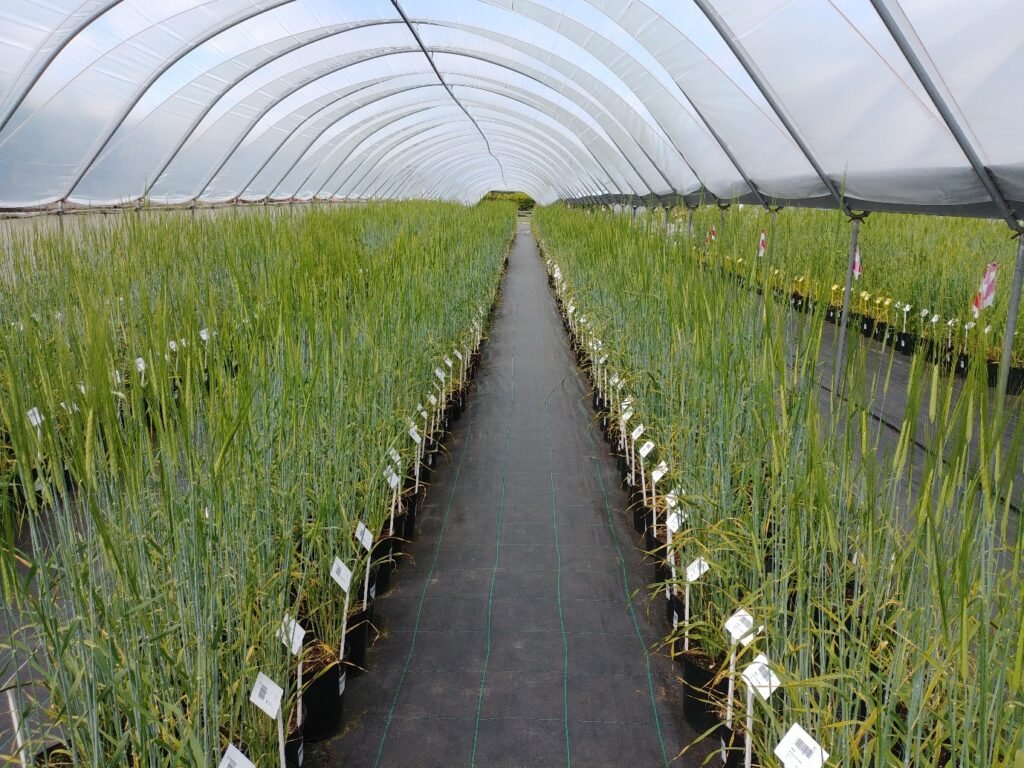
Researchers from The James Hutton Institute’s International Barley Hub (IBH), working within an international consortium led by the research units of the Clermont-Auvergne-Rhône- Alpes Centre (INRAE-UCA), have identified genomic evidence of convergentselection, a process where unrelated, or distantly related, crop species independently evolve similar genetic adaptations to the same environmental pressures.
Their findings have been published in the prestigious scientific journal Nature Plants.
Distantly related ancestral wheats and barley became founder crops of the agricultural revolution that began over 10,000 years ago in the near-east fertile crescent and later spread worldwide, where their successful cultivation demanded they adapt to diverse new and unique ecological demands.
The IBH, part of a £62m investment through the Tay Cities Region Deal (TRCD) a partnership between local, Scottish and UK governments and the private, academic and voluntary sectors, promotes scientific discovery and innovation to future-proof barley, the UK’s most valuable crop. Climate change and other environmental challenges, coupled with an increasing demand for the crop mean that research into genetics and breeding is vitally important to safeguard production and ensure a sustainable future for this most critical of crops.
The researchers on this study undertook a comparative genome wide molecular analysis of over 1,300 domesticated barley, emmer, durum and bread wheat lines searching for signs of perfectly or partially conserved molecular variants between the evolutionary counterparts of the same genes in order to understand whether the genetic changes reflecting such adaptations were the same among the different species.
They discovered that different species often adapted using similar genetic changes, and identified shared variants in genes that control plant development, inflorescence structure, starch grain size, tillering, root architecture, drought avoidance, and key domestication traits.
Professor Robbie Waugh, leader of the IBH contribution said: “These discoveries are important because they provide access to trait-associated gene sequence variants identified in one species that can be used as a guide to the creation or selection of the parallel variants in other species where the trait holds potential breeding value.
You Might Also Like:

“Combining these discoveries with modern precision breeding or targeted, chemical, mutagenesis (the production of genetic mutations) has the potential to impact and enhance modern plant breeding as it strives to address challenges in current and future crop production”.
The research lays the foundation for the concept of inter-crop translational breeding and provides a route to identify genes that are crucial for adaptation, along with sources of diversity for use in improving cultivated species.