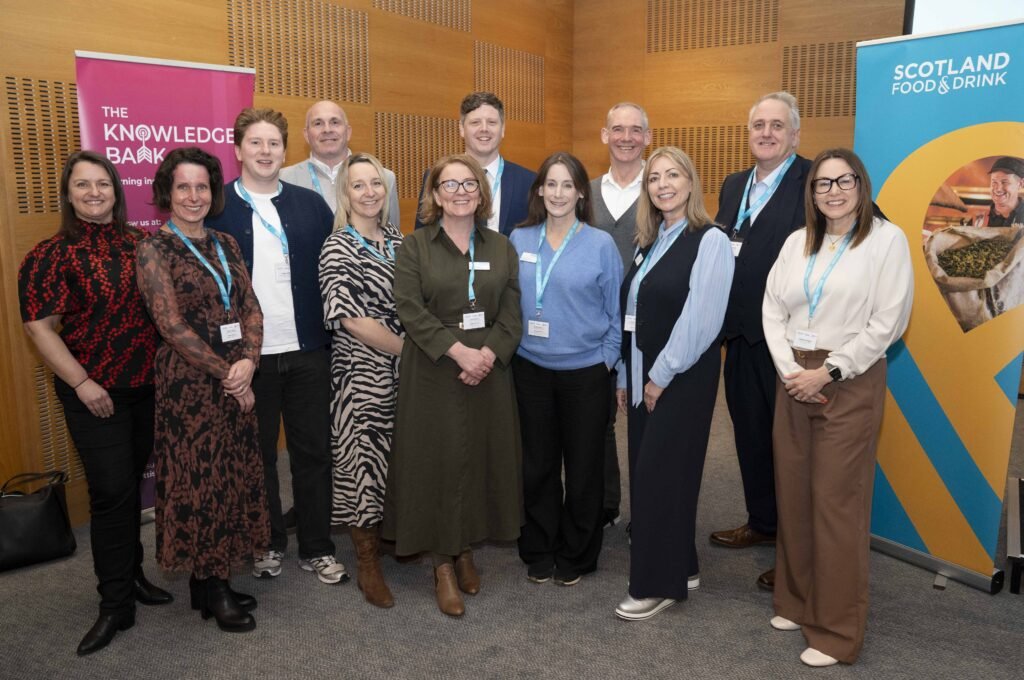
At a time when economic pressures are reshaping the landscape, industry leaders and producers convened in Edinburgh this week for the ‘Insight to Impact’ event. Hosted by Scotland Food & Drink’s The Knowledge Bank, the session delivered a clear, actionable roadmap for those ready to move beyond traditional thinking and embrace new consumer realities.
Against a backdrop of ongoing economic pressures, the event equipped producers with practical, data-driven strategies to move beyond traditional approaches and unlock growth. Through a series of expert-led sessions, attendees explored the evolving landscape across four key channels: Grocery, Convenience, Foodservice (Travel & Leisure), and Foodservice (Contract Catering & Events).
A key theme was the impact of changing demographics. With 32% of households forecast to be single person by 2030, producers were urged to think about this within their pack and portion size strategies.
In parallel, value still remains critical, but not at the expense of quality. Consumers are increasingly seeking products that deliver strong quality at a fair price, reinforcing the need for clear, compelling value propositions.
At the same time, speakers highlighted that experiential socialising has firmly established itself as a long-term trend, opening opportunities for brands to connect through occasions and experiences rather than just products.
Younger consumers are playing a defining role in shaping demand. Gen Z’s preference for premium convenience, paired with a growing trend for on-the-move consumption, is driving demand for formats and solutions that fit seamlessly into fast-paced lifestyles.
Health & Wellbeing was the standout area of growth. The new “Voice of the Scottish Consumer” tracker identified that two out of three Scots claim to “eat healthily and do physical exercise at least twice a week.” This is being amplified by the rise of GLP-1 adapted diets, with ~5% of UK consumers now using the medication for weight loss.
This convergence of health trends is driving a commensurate rise in retail new product development and small-portion meals in hospitality, creating new opportunities across many important Scottish food and drink categories.
However, the experts cautioned that in-store execution and presence on menus remains critical. Producers were encouraged to focus on driving footfall and clearly demonstrating incrementality to retail and foodservice partners. The smart use of operator media is becoming an increasingly powerful lever in this space, enabling more targeted and measurable impact.
Looking ahead, the event also spotlighted the imminent introduction of HFSS (High Fat, Sugar and Salt) regulations in Scotland, following their rollout in England, with discussion centred on the Scottish Government’s recent announcement. Attendees explored the likely impact on shopper baskets, including shifts in purchasing behaviour and category performance as restrictions take effect.
You Might Also Like:


Crucially, the session provided clear, practical guidance for producers, outlining the support available to help reformulate products and adapt portfolios in line with the new requirements, ensuring they remain competitive in a more regulated environment.
The overarching message from the event was clear – growth is still achievable, but it requires producers to be sharper, more agile, and more aligned to how consumers are living and shopping today.
Reflecting on the session, Carol Saunders, Head of Insights at Scotland Food & Drink said: “It was fantastic to welcome such a diverse range of producers and suppliers from across Scotland to the event and see them engage with the exclusive insights shared by our speakers. While we all know it’s a challenging time for businesses, the discussions highlighted that the sector continues to evolve, and that shifting consumer tastes and habits are creating exciting opportunities for businesses of all sizes.”