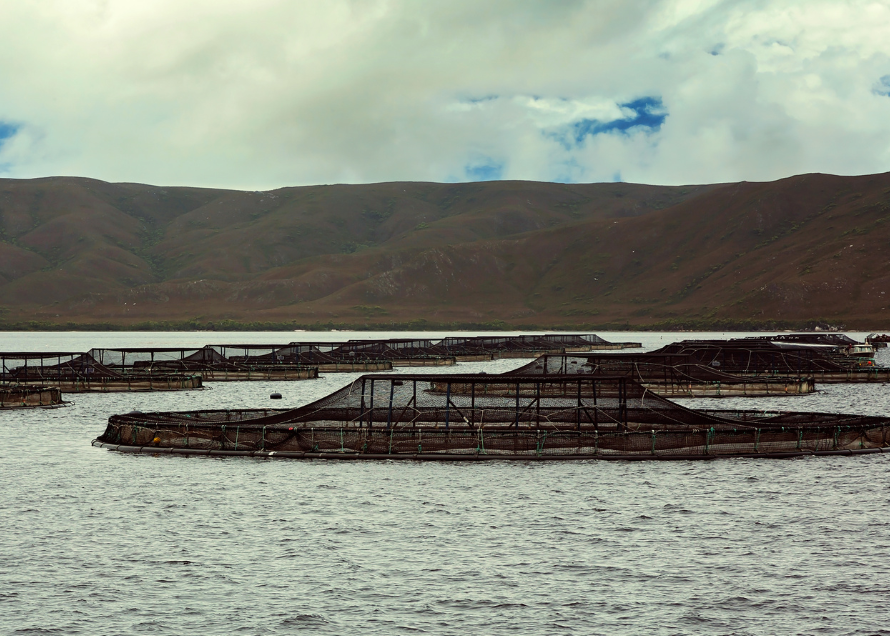
For years, Scotland’s salmon industry has sold an image of cold, clean seas and “responsibly farmed” fish. Behind that marketing, regulators have been sitting on welfare inspection reports detailing mass mortalities, gruesome failures and shocking conditions on farms linked to supermarket favourites Co‑op and Marks & Spencer.
The Information Commissioner’s Office (ICO) has ruled against the UK Government’s Animal and Plant Health Agency (APHA) after it refused to share welfare inspection reports from Scottish salmon farms. APHA had argued that publication “would likely result in significant detriment to the companies, negatively impacting their ability to conduct business, manage their reputation and their ability to protect their business”. The ICO rejected those arguments, ordering full disclosure and noting that APHA had already released some reports, and that much of the material dated back to 2021–22 so was unlikely to pose any real commercial risk. Animal Equality UK is hailing the decision as a “watershed moment for public transparency”.
The reports now released reveal a string of catastrophic mortality events that had never been properly aired in public. At Inchmore, a land‑based salmon farm operated by Mowi, over 100,000 fish suffocated after a worker left them unattended and their access to oxygen ceased. In a separate incident at the same site in the same month, a build‑up of hydrogen sulphide killed more than one million fish in just ten hours, yet APHA took no enforcement action. Another report from Applecross, run by Bakkafrost and certified by the RSPCA, records 600,000 fish dying from hydrogen sulphide, followed months later by a repeat incident that killed over 1.5 million fish – again, with no enforcement.
At Maevag Hatchery, a trout farm referred by the Fish Health Inspectorate, around 70,000 fish had already died and the 7,800 survivors were subsequently killed as “economically unviable”, with inspectors discovering the site had never reported mortality at all. APHA’s response was simply to email a copy of the Code of Good Practice.
In another case, nearly half a million fish were transferred to Cooke Aquaculture’s Ouseness site in Orkney in February 2022 and then hit by stormy seas and fungal infections. Within six weeks, 123,000 fish were dead, but because mortality during the first six weeks at sea does not have to be reported, neither the Fish Health Inspectorate nor APHA were told at the time. When APHA finally carried out a remote inspection months later, total deaths had topped 200,000 and there is still no record of a site visit.
Farm conditions behind supermarket labels
Alongside the documents, Animal Equality has released fresh footage from Fiunary, a Scottish Sea Farms site filmed in March 2026. The video shows salmon suffering from blindness, open wounds, severe sea lice infestations and missing noses. Scottish Sea Farms is the primary supplier to Marks & Spencer, and Fiunary is known to provide “Scottish salmon” to Co‑op, placing two of Britain’s best‑known retailers firmly in the frame. Between 16 February and 5 April 2026, Fiunary recorded 45,684 salmon deaths and has experienced elevated mortality for seven consecutive weeks, with nearly 10,000 deaths in the most recent weekly report. In the week the footage was filmed, 5,941 fish died, with Cardiomyopathy Syndrome – a viral heart disease with no vaccine – confirmed as the primary cause.
Fiunary has also logged lice levels far above the industry’s own limits during Scotland’s sensitive period for wild juvenile salmon. Farms are meant to keep average adult female lice below 0.5 per fish between 1 February and 30 June, but in the week beginning 9 February, Fiunary recorded 2.73 – almost five and a half times the threshold – before failing to submit lice counts for three consecutive weeks, citing veterinary advice and harvesting activity.
You Might Also Like:

“APHA’s culture of secrecy has to end”
The combination of the ICO ruling and Fiunary footage comes against a backdrop of rising concern at Holyrood about salmon farming’s death rates and its impact on wild Atlantic salmon, which are already at an all‑time recorded low. Animal Equality is now demanding that APHA discloses what steps, if any, it has taken in response to the Fiunary complaint and releases all inspection reports for the site and its operator, as the watchdog’s decision requires.
As Animal Equality UK’s executive director Abigail Penny said: “APHA’s culture of secrecy has to end. This information belongs to the public and should not be buried in bureaucracy to shield global conglomerates from proper scrutiny.” The charity is urging people who are “rightly concerned about the state of the Scottish salmon industry” to boycott salmon and other animal products, look to plant‑based recipes through its Love Veg campaign, and sign its petition calling for a halt to industry expansion.