The UK Government has agreed to invest in the reopening of the Redcar carbon dioxide (CO₂) plant as part of a contingency plan to safeguard domestic CO₂ supplies amid concerns over potential disruption linked to the conflict in Iran and the closure of the Strait of Hormuz. Ministers have said the decision is intended to protect key sectors, including food and drink manufacturing and livestock processing, which rely on CO₂ for a range of operations.
The Ensus-operated facility on Teesside had previously been closed following changes in international bioethanol trade, but will now receive substantial government support to restart production. Business Secretary Peter Kyle said the move would “enhance the resilience of our supply chains and safeguard crucial UK sectors such as food production, water, and healthcare, along with the jobs and communities reliant on these industries.”
Grant Pearson, chairman of Ensus UK, described the reopening as “fantastic news for both its workforce and the extensive supply network,” adding: “It reinforces the overall manufacturing economy in Teesside and strengthens the UK’s resilience concerning biogenic CO2 supplies.” CO₂ from the plant is used in carbonated drinks, food packaging and livestock processing, including as a stunning gas in some slaughterhouses.
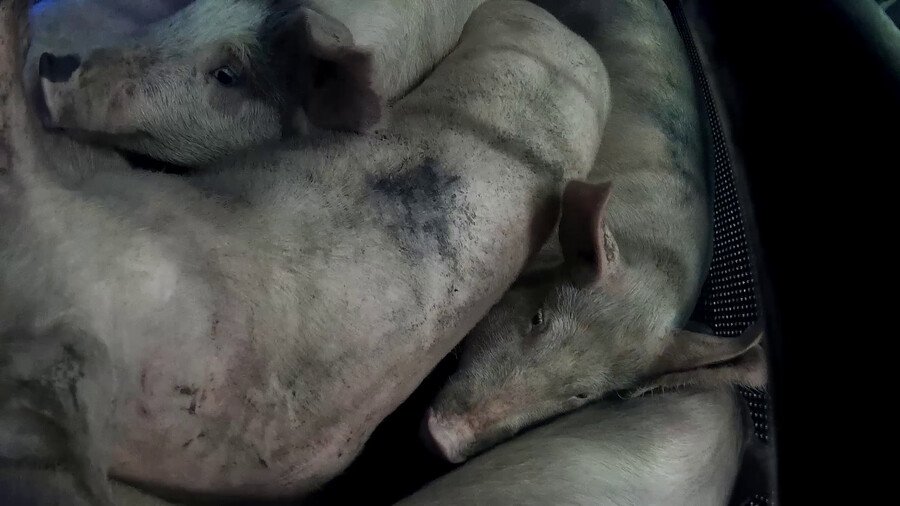
Ayrton Cooper, Animal Justice Project’s Campaigns Director said: “In just over a decade we’ve seen a 73% increase in the gassing of pigs in slaughterhouses in the UK; it is now the method of slaughter for 9 out of 10 pigs. Despite clear evidence showing how painful and distressing this method of killing is, the Government seems adamant in increasing supply of gases rather than tackling the issue directly and ending the gassing of pigs.”
CO₂ is widely used as a method of stunning pigs and poultry prior to slaughter in the UK. Food Standards Agency (FSA) survey data published in 2024 found that around 90% of pigs were stunned using high-concentration CO₂, with the remainder stunned electrically. For poultry, gas stunning systems now account for the majority of broiler chickens and turkeys and are used for almost all spent laying hens.
Industry representatives point to practical and economic reasons for the use of CO₂, including process efficiency and reduced handling of animals before slaughter. However, the method has been the focus of increasing scrutiny from welfare scientists, advisory committees and animal protection organisations.
Advisory committee findings and expert views
Concerns about the welfare impact of high-concentration CO₂ stunning have been documented for more than two decades. In 2003, the Farm Animal Welfare Council (FAWC), now the Animal Welfare Committee (AWC), recommended that high-concentration CO₂ should be phased out for pigs within five years. The AWC’s most recent opinion, published in 2025, concluded that “exposure of conscious pigs to high concentrations of CO2 is known to be both aversive to pigs and to cause them severe pain and distress before becoming unconscious.”
The committee noted that both FAWC (2003) and the European Food Safety Authority (EFSA) had previously advised that stunning live pigs with direct exposure to high-concentration CO₂ should be phased out. An EFSA report cited by the AWC stated that CO₂ concentrations above 30% were aversive, causing “hyperventilation and irritation of the mucous membranes as well as gasping behaviour before loss of consciousness.” By contrast, inert gases such as argon or nitrogen were described as having “animal welfare advantages” because hypoxia induced with these gases is not immediately aversive.
The Humane Slaughter Association has similarly highlighted scientific evidence of welfare issues associated with CO₂ stunning. Its chief executive, Huw Golledge, said: “There are serious concerns, based on robust scientific evidence, about the impact of CO2 stunning on pig welfare both amongst animal welfare experts and increasingly amongst the public too. Progress towards a more humane method has been too slow and the HSA would now hope to see rapid progress towards replacement of CO2, whilst acknowledging that significant practical challenges remain to be solved.”
Animal protection groups and campaign positions
Animal welfare charities and campaign groups have used the AWC’s findings to press for a clear timetable to end CO₂ use for pigs. In an open letter, a coalition of organisations coordinated by the RSPCA stated that “the use of high concentrations of CO2 remains an unacceptable compromise”, arguing that “the suffering endured by pigs in their final moments is unnecessary, preventable, and incompatible with the UK’s commitment to animal welfare.”
Compassion in World Farming has also called on the Government to act on the AWC’s advice. The group argues that, given the committee’s conclusion that high-concentration CO₂ is a “serious welfare concern”, the phase-out period for its use in pigs “should be as short as possible.”
You Might Also Like:
No related posts.
The Department for Environment, Food and Rural Affairs (Defra) has said it is considering the AWC’s recommendations as part of its wider Animal Welfare Strategy. Defra has indicated that it “wants to ban carbon dioxide gas stunning” as part of this strategy, according to statements reported in the farming press, but has not yet introduced detailed legislative proposals.
An article on the Animal Welfare Committee’s advice noted that any move away from CO₂ would require significant changes in the pork sector, given the current high level of reliance on gas stunning. It also warned of potential cost implications, quoting concerns from industry that “pushing domestic animal welfare standards and costs higher whilst importing product produced to lower standards can have a disastrous impact, while doing nothing to improve welfare.”
Against this backdrop, the decision to support the reopening of the Redcar CO₂ plant has prompted debate about how to balance supply security for essential industries with the goal of improving animal welfare at slaughter. Supporters of the plant’s reopening emphasise its role in stabilising CO₂ supplies for food, drink and healthcare, while welfare advocates continue to press for a transition away from high-concentration CO₂ stunning in line with expert advice.