The James Hutton Institute has been awarded almost £44,000 from NatureScot to create a robust, exciting and compelling plan for restoring nature in harmony with farming, based around the Hutton’s Glensaugh research farm in Aberdeenshire.
This project is supported by the Scottish Government’s Nature Restoration Fund, which is managed by NatureScot and provides funding for planning and executing large-scale restoration projects in Scotland.
In partnership with neighbouring land owner, Forestry and Land Scotland (FLS), the ambition is to create a plan that covers a whole headwater catchment area (the region of land that drains into a river system) of the North Esk and will detail restoration activities both for habitats and species, and for water management.
Upland farm areas, such as Glensaugh, are important environmentally, economically and culturally. They support a range of threatened species and habitats, play a major role in carbon storage, water storage and supply, and form the fabric of rural communities. However, decades of intensifying food production have depleted biodiversity both above and below ground, and there is an urgent need to transform how this land is managed and address the biodiversity crisis.
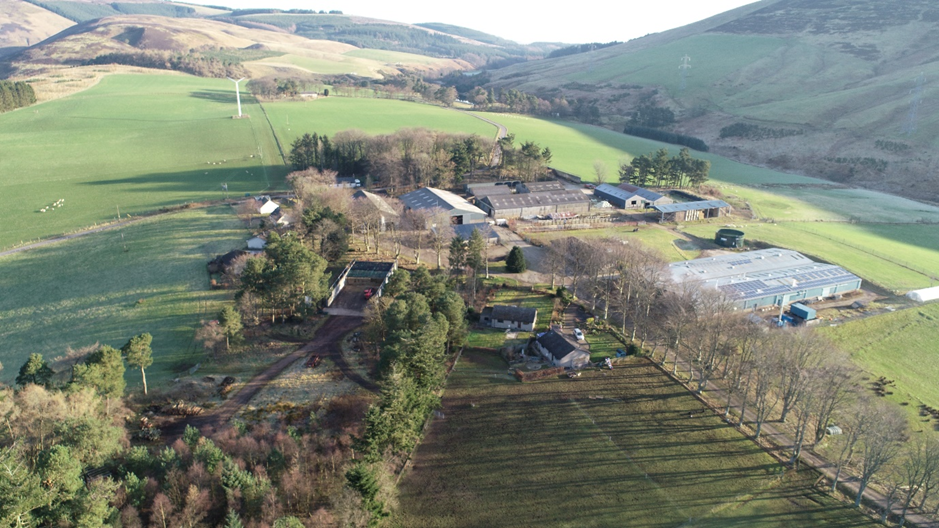
Change is also needed to mitigate the impacts of climate change on water availability, biodiversity, soils and food production, and Glensaugh is home to the Hutton’s climate Positive Farming Initiative which is helping to find ways in which farming can help address these impacts.
The authors of the plan aim to demonstrate “win-wins” which show how nature, water management and farming can come together for mutual benefit. As a 1,000ha livestock farm with a range of habitats, Glensaugh provides an excellent testing and demonstration site for developments that could potentially be utilised at other farms, giving landowners an insight into restoration activities which may work for them.
Dr Stephen Addy, a Hutton hydromorphologist and the project’s lead, said: “This funding gives us a fantastic opportunity to plan restoration actions on a large scale at Glensaugh that could be applicable to upland farming systems elsewhere to tackle climate change impacts and threats to biodiversity. Future implementation and demonstration of actions within the plan have the potential to benefit the resilience of both upland ecosystems and farms.”
Researchers are currently gathering evidence for the plan, which is set to be complete by the end of March 2026.