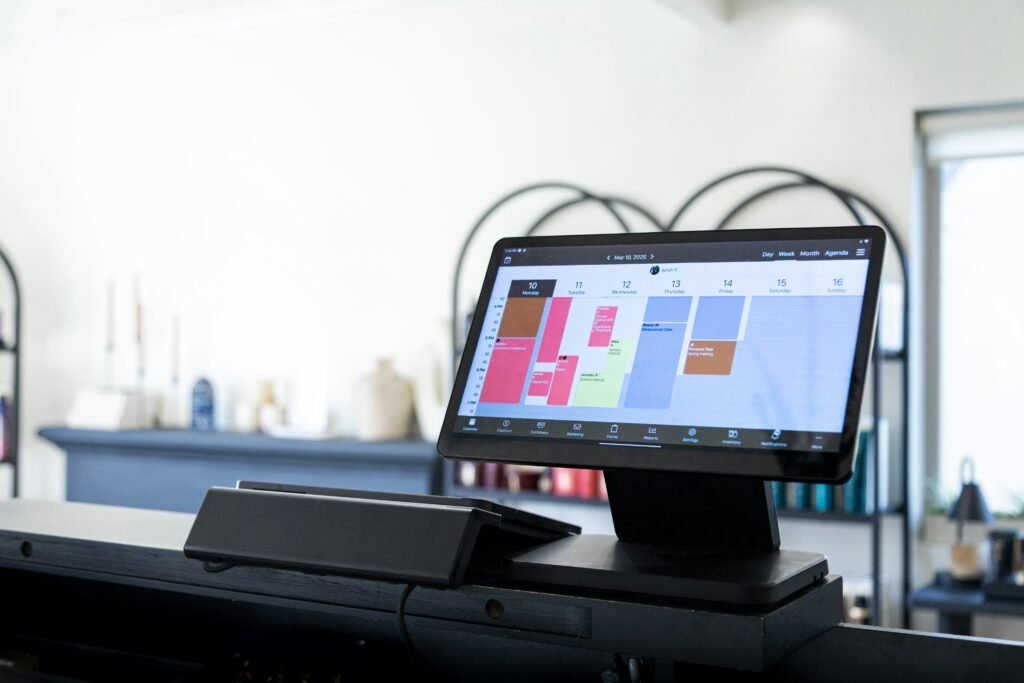
Ransomware is no longer just a problem for hospitals and councils. It is now a real risk for restaurants, bars, cafés and food businesses across Scotland. As more venues rely on point‑of‑sale (POS) systems, online bookings, delivery apps and digital payroll, a single cyber attack can stop service in its tracks.
For an independent operator, it does not take a national‑scale attack to do serious damage. If you suddenly lose access to your tills, card terminals, booking system or staff rota, everything slows down: queues grow, orders are missed, stock control becomes guesswork and customers start to lose confidence. In a business where margins are thin and busy weekends pay the bills, even a short outage can hurt.
Why hospitality is now in the firing line
Most modern hospitality businesses run on a patchwork of digital tools: tills and card machines, reservation and ordering platforms, Wi‑Fi for guests, staff messaging apps, accounting packages and supplier portals. Some of these are cloud services, some are older systems that “just keep going”, and some are managed by outside IT companies. Any weak link in that chain can be an entry point for an attacker.
Security reports on retail and hospitality consistently highlight the same issues: phishing emails that trick staff, weak or shared passwords, devices that are not patched, open remote‑access tools and problems at third‑party suppliers. High staff turnover and seasonal teams make it harder to keep everybody trained and to remove old accounts when people leave. From a criminal’s point of view, this is an attractive environment: lots of systems, plenty of people to target, and often no dedicated IT team watching everything.
There is also a simple business reality. Hospitality lives on constant card payments and tight schedules. Many venues hold customer contact details, booking histories, loyalty data and staff records. That combination – low tolerance for downtime plus useful data – is exactly what ransomware groups look for.
What a ransomware attack might look like in your venue
The worst‑case picture is easy to imagine: you open the doors and nothing works. Tills and card terminals are frozen, the booking system is offline, and a ransom note appears on a screen demanding payment in return for restoring access. But in practice, ransomware can creep in more quietly.
Attackers often start by compromising an email account or a laptop, then move sideways into other systems. They might change supplier bank details on an invoice, harvest passwords, or reach a server that holds your POS data or booking history. In some cases, the weak spot does not belong to you at all. A software provider, payment processor or booking platform may be hit, taking many customers with it.
This pattern is very similar to what Scotland has already seen in the public sector. Ransomware attacks on SEPA, Dundee and Angus College, Western Isles council and West Lothian schools all began with a gap in systems or governance and ended with major disruption and data exposure. The sectors are different, but the method is not.
The risks that matter most to hospitality
For hospitality, three risks stand out.
- Operational shutdown. If you cannot take payments, see bookings, access menus or contact staff, you are already in crisis. Even if you can limp along on cash and paper, the customer experience suffers fast.
- Data theft and leak sites. Many ransomware gangs now steal data first and then encrypt systems. They threaten to publish what they have – customer lists, staff payroll details, supplier contracts – on public “leak sites” if you do not pay. That creates privacy, fraud and reputational risks even if you restore systems from backup.
- Third‑party dependency. Your POS vendor, reservations partner, delivery platform or outsourced IT provider can be the weak link. If they are hit, you feel it, even if your own devices are clean.
These are exactly the kinds of weaknesses that Scottish public bodies have already been forced to confront under pressure. The difference for hospitality is that there is usually less slack in the system and fewer people dedicated to technology.
Practical steps for independent operators
The aim is not to turn every restaurant or bar into a tech company. It is to do the basics well and to ask better questions of suppliers.
A short, realistic checklist:
You Might Also Like:
No related posts.
- Know your critical systems. Make a simple list of the tools you cannot trade without: POS, payments, bookings, payroll, ordering, stock.
- Turn on multifactor authentication (MFA). Wherever your systems allow it – email, bookings, accounting – use MFA so a stolen password alone is not enough.
- Keep devices and apps updated. Make sure tills, laptops and tablets install security updates, and replace truly obsolete kit rather than ignoring warnings.
- Limit admin access. Only a small number of trusted people should have full control over key systems and settings.
- Have at least one clean backup. Work with your IT provider or software partners to ensure that critical data is backed up somewhere ransomware cannot easily reach, and that you know how you would restore it.
- Ask suppliers about their incident plans. If your POS, booking or IT company is hit, how will they tell you, how fast can they recover, and what is your fallback in the meantime?
Staff awareness still matters – especially around suspicious emails and unexpected attachments – but Scotland’s wider ransomware experience shows that training alone is never enough. Owners and managers need to back it up with sensible system design, simple rules on access and a basic plan for how they would trade for a few days without their usual tech.
Ransomware has already forced Scottish councils, colleges and schools to rethink how they run critical services. Hospitality may not have made the same headlines yet, but the underlying risk is real and current. For a deeper look at how these attacks have unfolded across Scotland – and what to learn from them – Larder readers can turn to Silicon Scotland’s ransomware series, which tracks the story from early NHS incidents through to the most recent Scottish cases.