Kent and Sussex vineyards report concentrated fruit and strong varietal performance, drawing parallels to acclaimed previous harvests.
Gusbourne, the English sparkling wine producer, has concluded its 2026 harvest, with preliminary assessments pointing to an exceptional vintage characterised by ripe, concentrated fruit. Head Winemaker Mary Bridges described the harvest as possessing a “big personality” and being “powerful, intense and full of potential,” provisionally placing it alongside the 2018, 2020, and 2022 vintages in terms of generosity. Gusbourne operates its vineyards across Kent and West Sussex, focusing on producing vintage-only sparkling wines from estate-grown, hand-harvested grapes.
The company noted particular success with Pinot Noir and Pinot Meunier grapes, describing the Pinot fruit as among the best in memory for its clean, evenly ripened, and concentrated quality. Bridges drew a close comparison to the 2018 harvest, anticipating an excellent year for still Pinot Noir. Yields for these varieties reportedly surpassed initial estimates, a result attributed in part to targeted crop thinning in the Mill Hill East vineyard, which promoted uniform ripening. The 2018 vintage, often hailed as a “harvest of the century” for English wine, was characterised by a warm, dry summer and high yields, leading to optimism for still wines.
You Might Also Like:




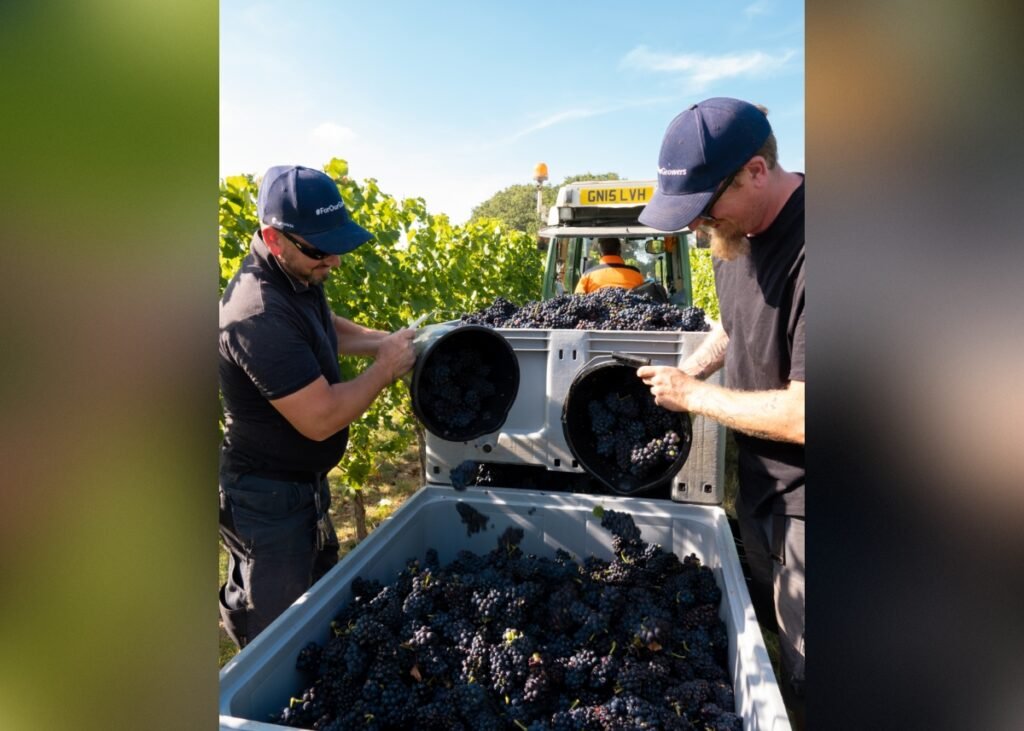
The 2026 harvest commenced notably early, starting on 26 August in Boot Hill and concluding on 18 September with Chardonnay 809. This timeline represents an approximate two-week advancement compared to the 2025 harvest, at both the beginning and end of picking. The process spanned around 20 days, with winemakers paying close attention to sugar and acidity levels. Chardonnay required more selective picking, with any fruit not deemed pristine left in the vineyard. The English wine industry has experienced a period of growth, with increasing vine plantings and production, driven by suitable climatic conditions.
Despite a long, hot, and largely unbroken summer, vines maintained healthy conditions with low disease pressure, according to the report. Mature root systems prevented water stress, and the humid heat of 2026 was reportedly less challenging for the vines than the dry 40°C temperature spikes recorded in 2022. Spring frosts had minimal impact, and pest pressure, including spotted wing drosophila, remained very low. The 2022 harvest was also marked by a long, warm season, though some vineyards faced challenges with extreme heat.
Bridges outlined winemaking plans that prioritise blending flexibility, with approximately 130-140 components under consideration. Strategies include maturing some Chardonnay in large foudres and the potential introduction of a new Chardonnay 809. Foudres are large wooden vats that allow for subtle oxygen exchange with minimal oak flavour transfer, preserving fruit character. Additionally, Gusbourne plans to hold back malolactic fermentation on some Chardonnay tanks to expand blending options. Malolactic fermentation is a process where tart malic acid is converted to softer lactic acid, often contributing to a rounder mouthfeel. The early start to the harvest may also bring forward the blending process, the company stated.