
A reported £1 million loss linked to an allegedly damaged wine collection has put the spotlight on a familiar problem for collectors and casual drinkers alike: storing bottles in the wrong conditions.
Heat, sudden temperature changes, direct light and poor humidity control can all affect a wine’s quality over time – and, for valuable bottles, potentially its resale value. With more people building wine collections at home, an expert from Hay Wines has shared the key rules for keeping reds, whites, rosés and sparkling wines in their best condition.
Michele Longari, Purchasing Director at Hay Wines and Italian Wine Ambassador for Vinitaly International, said consistency matters more than chasing exact temperatures for every style.
“If wine isn’t kept at the correct temperature or stored properly, its quality can deteriorate quickly, and in some cases, it may be ruined entirely,” he said. “Consistency is key when it comes to preserving both taste and value.”
For long-term storage, Longari recommends a consistently cool environment of around 10–14°C, away from light and major temperature swings.
Places to avoid
The kitchen may be convenient, but it is rarely the best home for a wine collection. Ovens, hobs, dishwashers and changing room temperatures can expose bottles to repeated fluctuations, accelerating ageing and affecting flavour.
Wine should also be kept away from direct sunlight, bright indoor lighting and warm spots such as windowsills, radiators, boiler cupboards or the top of the fridge. Domestic refrigerators are useful for chilling a bottle before drinking, but are not designed for long-term storage because of their low temperatures, dry air and vibration.
“Rapid temperature changes can spoil wine,” Longari explained. “If bottles are exposed to heat or sudden shifts, the ageing process speeds up and the flavour deteriorates.”
Storing unopened bottles
White wines should be kept somewhere cool, dark and stable. The fridge is suitable if a bottle will be opened within a couple of weeks, but a wine cooler or consistently cool cupboard is a better option for longer storage.
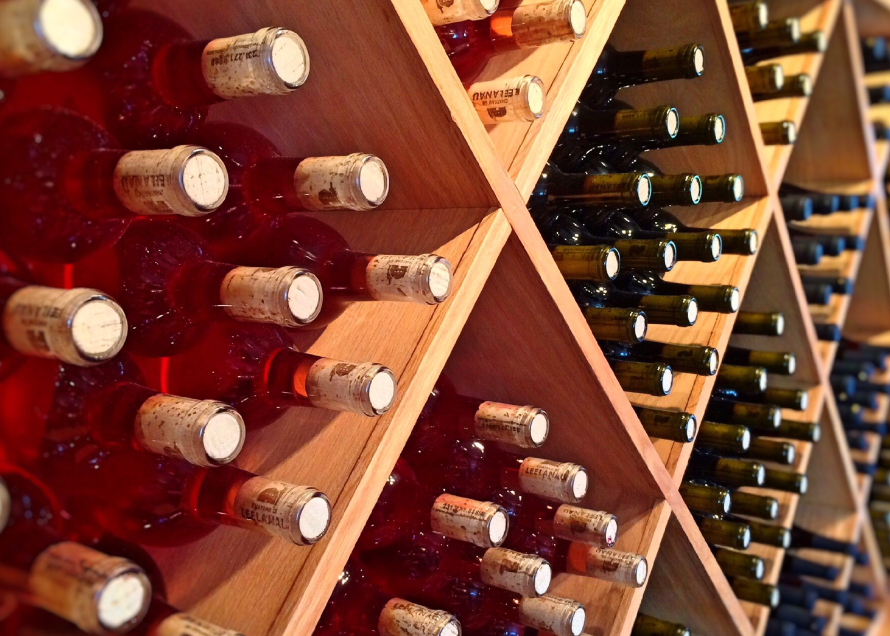
Corked bottles should generally be stored on their side to help keep the cork moist and reduce the risk of air entering the bottle. Bottles with screw caps can be stored upright.
Many everyday whites are made to be enjoyed within a few years of release. However, more premium wines with the right balance of acidity, structure and quality can develop over a much longer period when stored well.
Red wines need the same stable, cool conditions. A pantry, cupboard or closet can work well, provided it is not exposed to warmth, sunlight or regular temperature changes. As with white wine, corked reds should be stored horizontally, while screw-cap bottles can stand upright.
The ageing potential will depend on the wine itself. Lighter styles, including many Pinot Noirs, are often best enjoyed relatively young. Fuller-bodied reds such as Cabernet Sauvignon and Bordeaux can have the structure to mature over longer periods if conditions are right.
Rosé should be treated much like white wine: stored somewhere cool, dark and consistent. Sparkling wines, including Champagne and Prosecco, should also be protected from heat and light.
While it is fine to chill sparkling wine in the fridge ahead of serving, Longari said it should not become its permanent home.
“Keeping sparkling wine in the fridge for a short period before serving is perfectly fine, but for longer-term storage, a consistently cool environment is much more suitable,” he said.
Once the bottle is open
After opening, oxygen becomes the main enemy. The aim is to slow oxidation and retain as much freshness as possible.
- Reseal the bottle using its original cork or a suitable stopper.
- Keep it upright to reduce the surface area exposed to air.
- Put it in the fridge – including red wine, as colder temperatures slow chemical reactions.
- Keep it away from sunlight and heat.
For everyday drinking, these simple steps can buy a bottle extra time and help preserve its character for another glass or two.
Don’t judge by the label
You Might Also Like:



Visible mould on the outside of a bottle, label or wooden case can be worrying, particularly for collectors. However, it does not automatically mean the wine inside has been spoiled.
In humid cellar conditions, mould can affect the packaging and reduce a collection’s presentation or resale value, while the sealed wine itself may remain unaffected. The key question is whether the bottle’s closure has remained intact and whether it has been stored in stable conditions.
“Ultimately, storing wine correctly comes down to consistency,” Longari said. “Keep it at a stable temperature, minimise light exposure, and store bottles properly. These are small steps that can make a significant difference over time.”