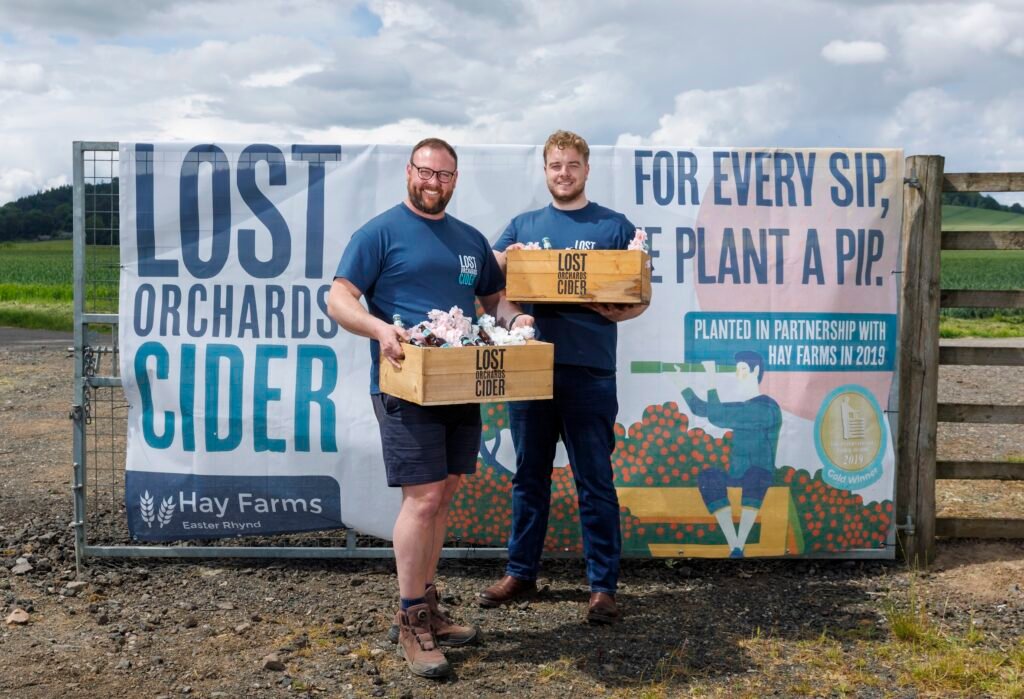
A Scottish cider producer is on a mission to establish Scotland as a serious global player in cider, as it expands orchard production near Dundee and invests in the long-term revival of commercial apple growing.
Lost Orchards Cider, which works in partnership with some of Scotland’s largest fruit growers, is replanting thousands of apple trees as part of a wider strategy to restore traditional orchard farming and strengthen Scotland’s cider credentials.
Despite strong cider consumption across Scotland, the business believes the country has long been overlooked as a producer in its own right – something it is determined to change.
That ambition has already been backed by international recognition. The company’s Pure Apple Cider secured gold at the International Cider Awards before the brand had officially launched, outperforming major global producers in the Modern Cider category.
Unlike many competitors, Lost Orchards uses only Scottish-grown apples, avoiding imported concentrate. The fruit is washed, pressed and fermented using champagne yeast before being matured in stainless steel.
Production is growing steadily. The company planted thousands of apple trees and produced just over 180 tonnes of apples last year, with yields expected to rise significantly as orchards mature.
Co-founder Angus Morrison said Scotland has all the ingredients required to produce exceptional cider.
“If Japan can make some of the world’s best award-winning whisky, then there is no reason why Scotland can’t make world-class cider in the traditional way,” he said.
“For too long, people have assumed great cider only comes from places like Somerset, but we believe Scotland, particularly with changing weather patterns, is a sleeping giant of cider production which is just awakening.
“We grow beautiful fruit here, we have the expertise, and we have already proved that our Scottish cider can win on the international stage.”
Morrison also highlighted the importance of authenticity in a competitive drinks market.
“We’re growing apples in Scotland, pressing them here, and making cider from our orchards and through our other contracted growers, while others import concentrate and put a Scottish label on it,” he said.
“Consumers increasingly care about provenance and traceability. They want to know where things come from, who made them and what they are supporting when they buy them.
“At the same time, independent drinks producers are under real pressure. Big global brands dominate so much of the market, but we think there is a real appetite for products that are independent, transparent and genuinely rooted in Scotland.
“There are so many Scottish strivers out there – companies flying the flag for our country and building brilliant businesses here. We’re proud to be part of that movement.”
The Lost Orchards range includes Pure Apple, Scottish Dark Berries, Scottish Red Berries & Lime, and a low-alcohol Pure Apple cider, all of which are naturally gluten-free. The fruit is sourced from the same network of farms, including the Husband family farm at East Adamson in Angus, where the first orchard was planted in 2012 and fruit has been grown for three generations.
David Hay, a co-founder and one of the company’s key growers, said the long-term nature of orchard farming is central to the business’s ethos.
“Seeing the trees in full blossom in the spring and full of fruit in the autumn is incredibly rewarding, knowing that what we are producing on our farm ends up as an award-winning product enjoyed by thousands,” he said.
“Planting orchards is not a quick return. It takes time, patience and belief. But Scotland has the potential to grow excellent fruit at commercial scale, and we want to help bring that industry back.
“Every tree planted is part of a bigger story about Scottish agriculture, provenance and the future of cider.”
You Might Also Like:

Looking ahead, the company hopes to cement cider as a recognised part of Scotland’s food and drink identity.
“Tourists come to Scotland looking for the best of Scottish food and drink, but too often genuinely local producers are squeezed out by international products,” Morrison added.
“We want genuine traditional cider to become part of modern Scottish food and drink culture: something people are proud to drink, stock and serve.”